How Hard Can You Prune Overgrown Shrubs in Spring?
Wondering how hard you can cut back overgrown shrubs in spring? Learn safe rejuvenation pruning, ideal timing, and how to refresh your mulch beds the right way.
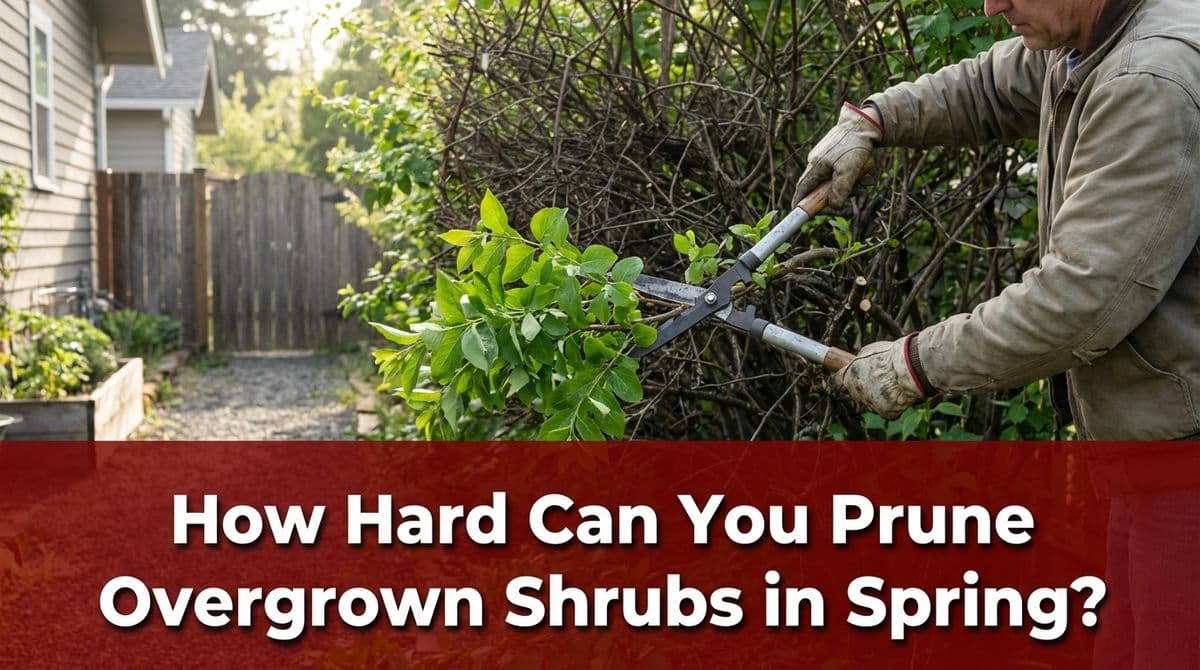
When a “Harsh Trim” Is Actually the Right Move
We recently got a call from a homeowner — let’s call him David — who wanted, in his words, all the shrubs around his house “pulled back really, really harshly” before spring growth kicked in. He also wanted fresh mulch in all his beds and was guessing he’d need about 8–10 yards after doing a few beds himself the previous year.
We’re a professional lawn and landscape company, and we’ve seen this exact situation many times: shrubs haven’t been trimmed in a few years, beds are tired, and spring is just around the corner. In our landscaping work, calls like David’s are often the start of a full rejuvenation project.
David had experimented the year before by cutting three of his main shrubs way back to see if they’d survive. They did great, so now he wanted the rest of the landscape to match. His big question was one we hear every spring:
“How hard can I prune these overgrown shrubs in spring without killing them, and when should I do it?”
Let’s walk through the same guidance we gave him, so you can tackle your own shrubs and mulch beds with confidence.
Rejuvenation Pruning vs. Regular Trimming
First, it helps to understand the difference between a light trim and the “pulled back hard” cut David was talking about.
Regular trimming is what most homeowners do once or twice a year:
- Taking off a few inches of growth
- Maintaining a neat shape
- Keeping shrubs from crowding walkways or windows
Rejuvenation pruning is more intense:
- Cutting shrubs back by one-third to one-half their size (sometimes more)
- Removing old, woody stems to encourage new growth
- Rescuing shrubs that haven’t been touched in years
David’s shrubs — including his yews and other evergreen foundation plantings — had gone several seasons without care. That’s exactly when we start talking about rejuvenation pruning instead of just a quick shape-up.
How Hard Can You Cut Back Overgrown Shrubs?
The honest answer: it depends on the type of shrub. When we walk a property, we always identify the plants first, then decide how aggressive we can be. Here’s the short version of what we explained to David.
Evergreens (Like Yews)
David specifically mentioned yews and other evergreen shrubs along his foundation. With these, you can prune fairly hard, but there are limits:
- You can usually remove up to one-third of the plant height in a single year.
- Try not to cut back into all-brown, leafless wood on evergreens that don’t bud on old wood (many won’t resprout well).
- Shape the shrub slightly narrower at the top than the bottom so lower branches still get sunlight.
In our visit with David, we recommended an aggressive, but not “down to the stumps,” cut on the yews: enough to bring them back under control while still leaving healthy green growth to push new shoots.
Deciduous Flowering Shrubs
For deciduous shrubs (those that lose leaves in winter), timing and bloom type matter:
- Spring bloomers (like lilacs, forsythia): prune right after they flower, or you’ll cut off this year’s blooms.
- Summer bloomers (like spirea, potentilla): these usually bloom on new wood and can be cut back hard in late winter or early spring.
If David’s beds had included older, leggy deciduous shrubs, we might have recommended a multi-year rejuvenation plan: removing one-third of the oldest stems each year rather than taking the whole shrub down all at once.
Best Time in Spring to Do Heavy Pruning
David wanted to get the work done “before they start sprouting fresh growth.” He was right on track. Here’s why we like that timing:
- Late winter to very early spring (while shrubs are still dormant) is ideal for most rejuvenation pruning.
- The plant hasn’t started spending energy on new growth yet, so it can respond strongly once the weather warms.
- Without leaves in the way, it’s easier to see the structure and remove old, crossing, or damaged branches.
Our rule of thumb: once you see consistent new buds swelling and leaves starting to open, it’s better to switch from harsh rejuvenation cuts to lighter, selective pruning for that season.
Pairing Shrub Pruning with a Mulch Bed Refresh
Along with pruning, David wanted all his beds mulched — he’d done three beds himself the year before with about five yards of mulch and estimated he needed another 8–10 yards for the rest.
We often combine shrub rejuvenation with a mulch bed refresh because:
- Pruning drops a lot of debris; cleanup naturally leads into bed prep.
- Fresh mulch finishes the look and protects the newly pruned plants.
- It’s more efficient to do everything in one visit rather than piecemeal.
How Much Mulch Do You Really Need?
David’s estimate wasn’t far off, but we still measure each bed during our visit. As a homeowner, you can get close on your own:
- Measure each bed (length × width) to get square footage.
- Decide on depth: 2–3 inches is standard for most beds.
- Use this rule of thumb: 1 cubic yard covers about 100 sq. ft. at 3 inches deep.
Add up all your beds and divide by 100 to get a rough yardage. If you’re refreshing existing mulch rather than starting from bare soil, you may be able to go a bit lighter.
Simple Steps for a Clean, Refreshed Spring Landscape
When we scheduled David’s project for early spring, our crew followed a basic sequence that works for most homes:
- Walk the property and identify each shrub (evergreen vs. flowering, condition, size).
- Do the rejuvenation pruning first: remove dead/diseased wood, then reduce size carefully.
- Clean up debris: rake out clippings, old leaves, and weeds from each bed.
- Edge the beds to create a crisp line between lawn and mulch.
- Apply mulch at 2–3 inches deep, keeping it pulled back a few inches from shrub trunks.
By tackling pruning and mulch together, David’s landscape went from overgrown and tired to neat and healthy-looking before the main flush of spring growth even started.
When to Call in a Pro
If your shrubs haven’t been touched in years, or you’re nervous about cutting them back too far, it’s absolutely okay to call in help. In our experience, most homeowners are more worried about “killing” plants than they need to be — but there are some shrubs that don’t bounce back well from severe cuts.
A professional can:
- Identify your specific shrubs and how hard they can be pruned
- Schedule the work at the right time for your area and plant types
- Handle the heavy lifting of pruning, cleanup, and mulch installation
Whether you tackle it yourself or bring in a crew, early spring is a perfect time to reset overgrown shrubs and refresh those mulch beds so your whole yard looks sharp all season.