Large Paver Patio and Walkway Built for Day and Night Use
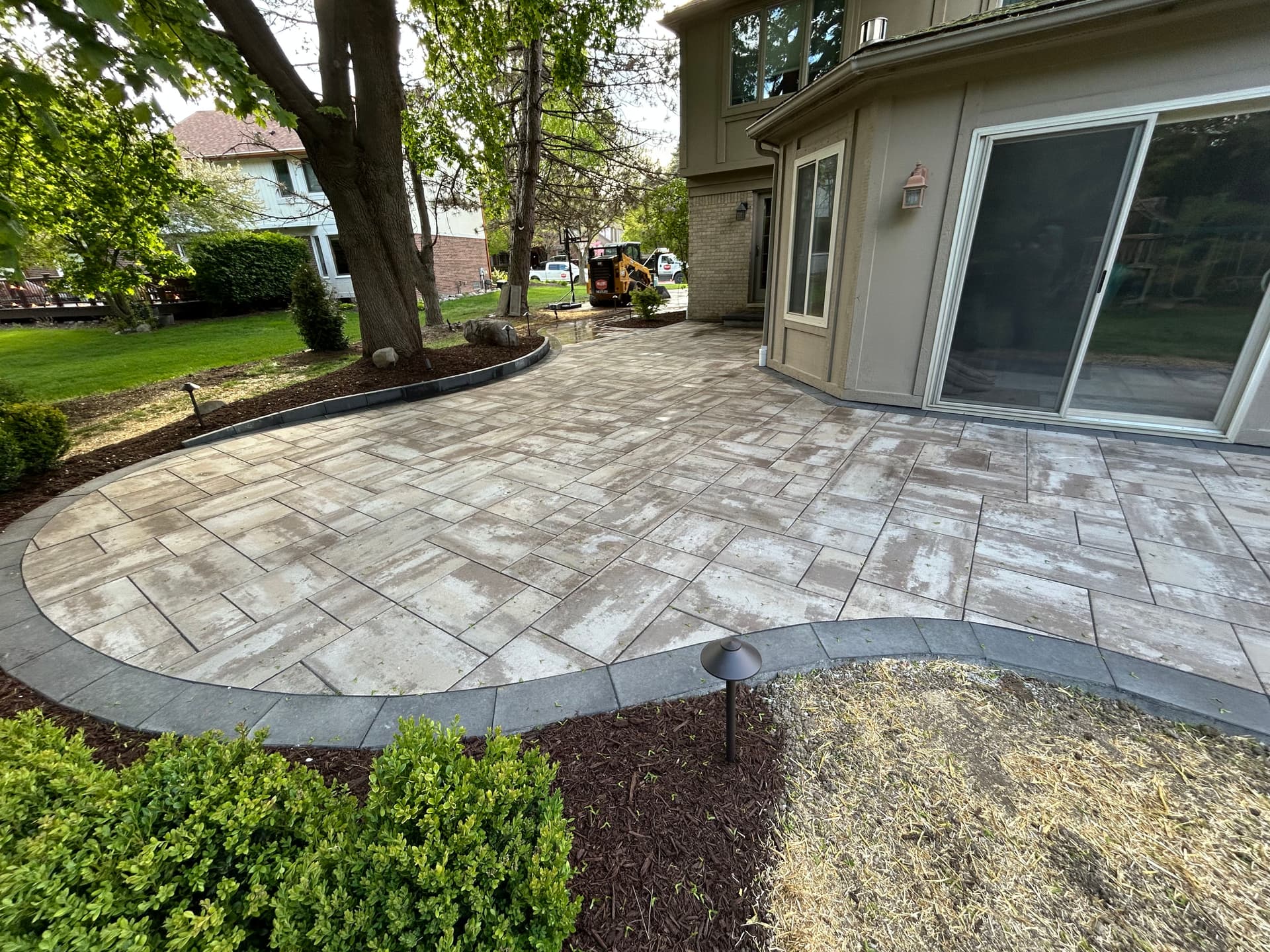
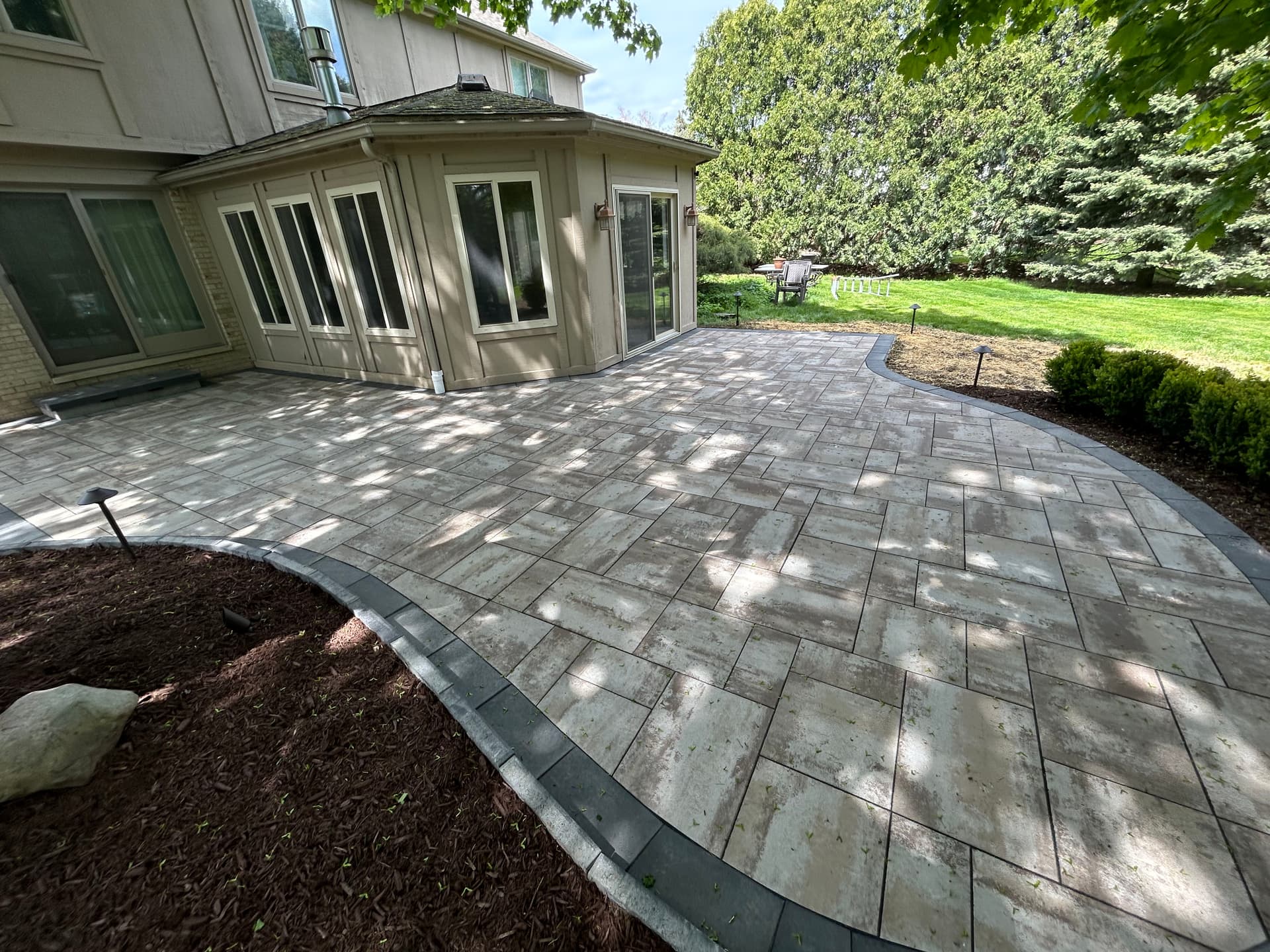
Most backyards don't get used nearly as much as they should. The space is there - the usable surface just isn't. That's the problem we solve with a paver patio done right. This one is a good example of what happens when hardscaping is planned with both function and appearance in mind.
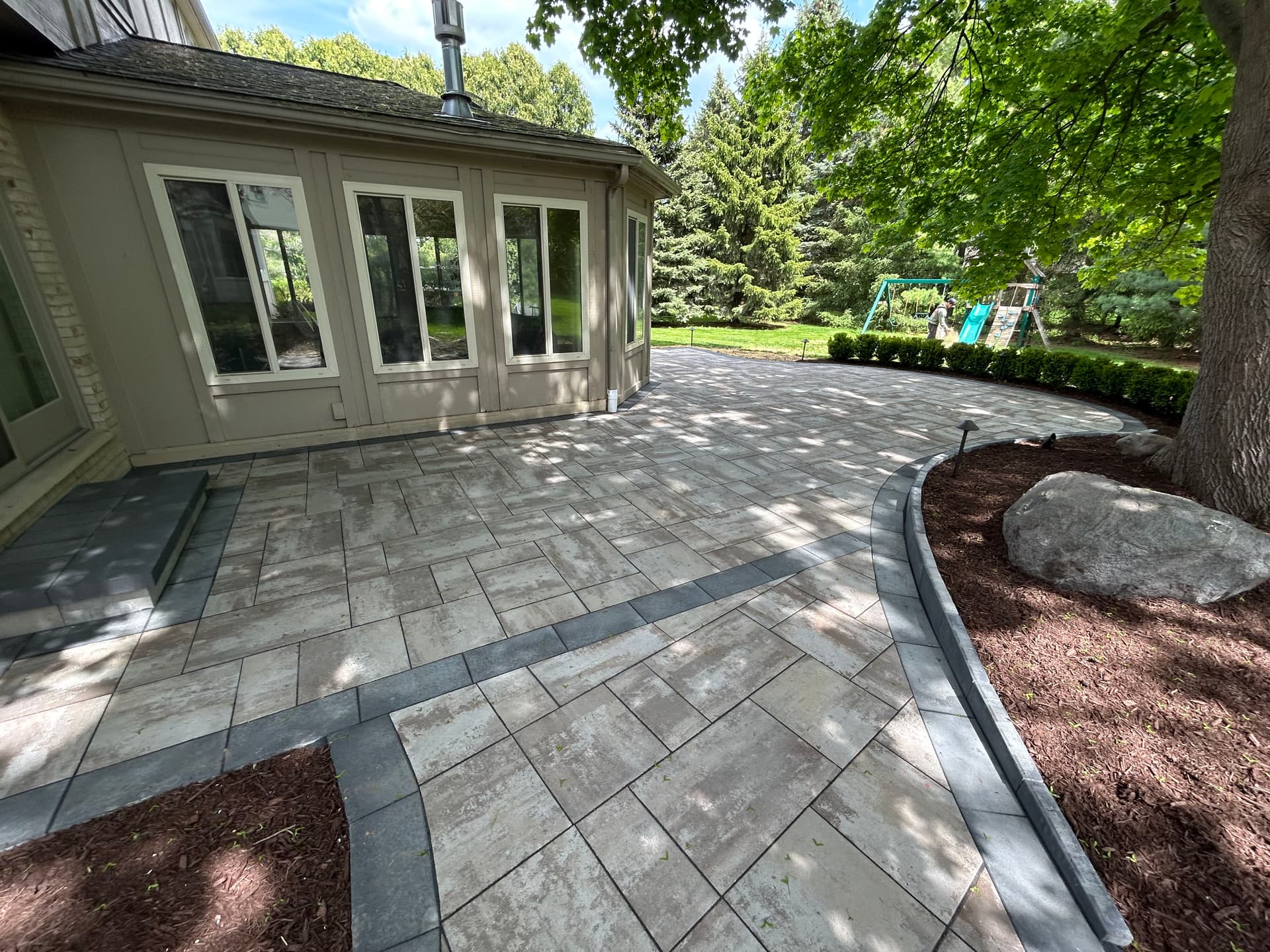
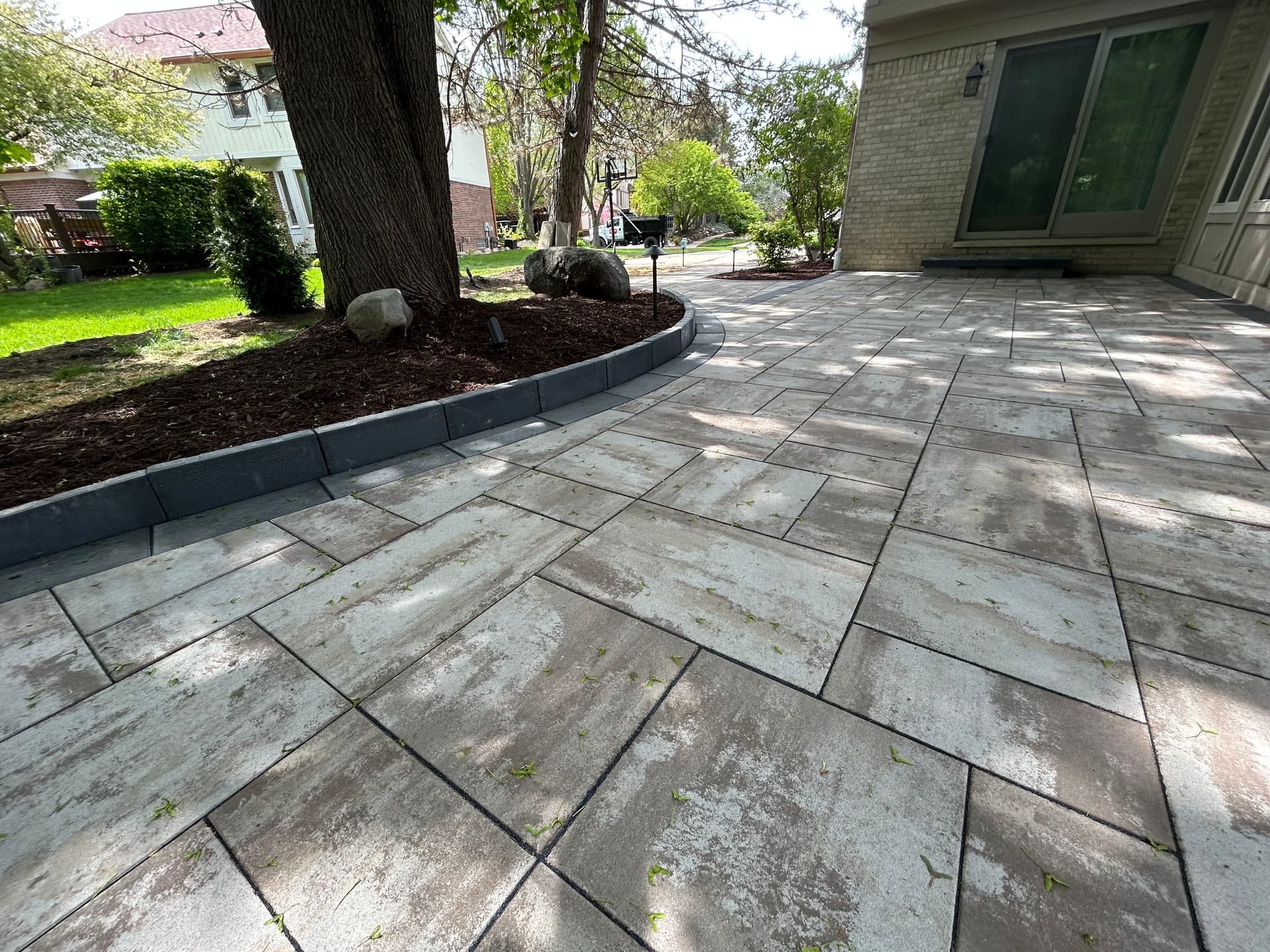
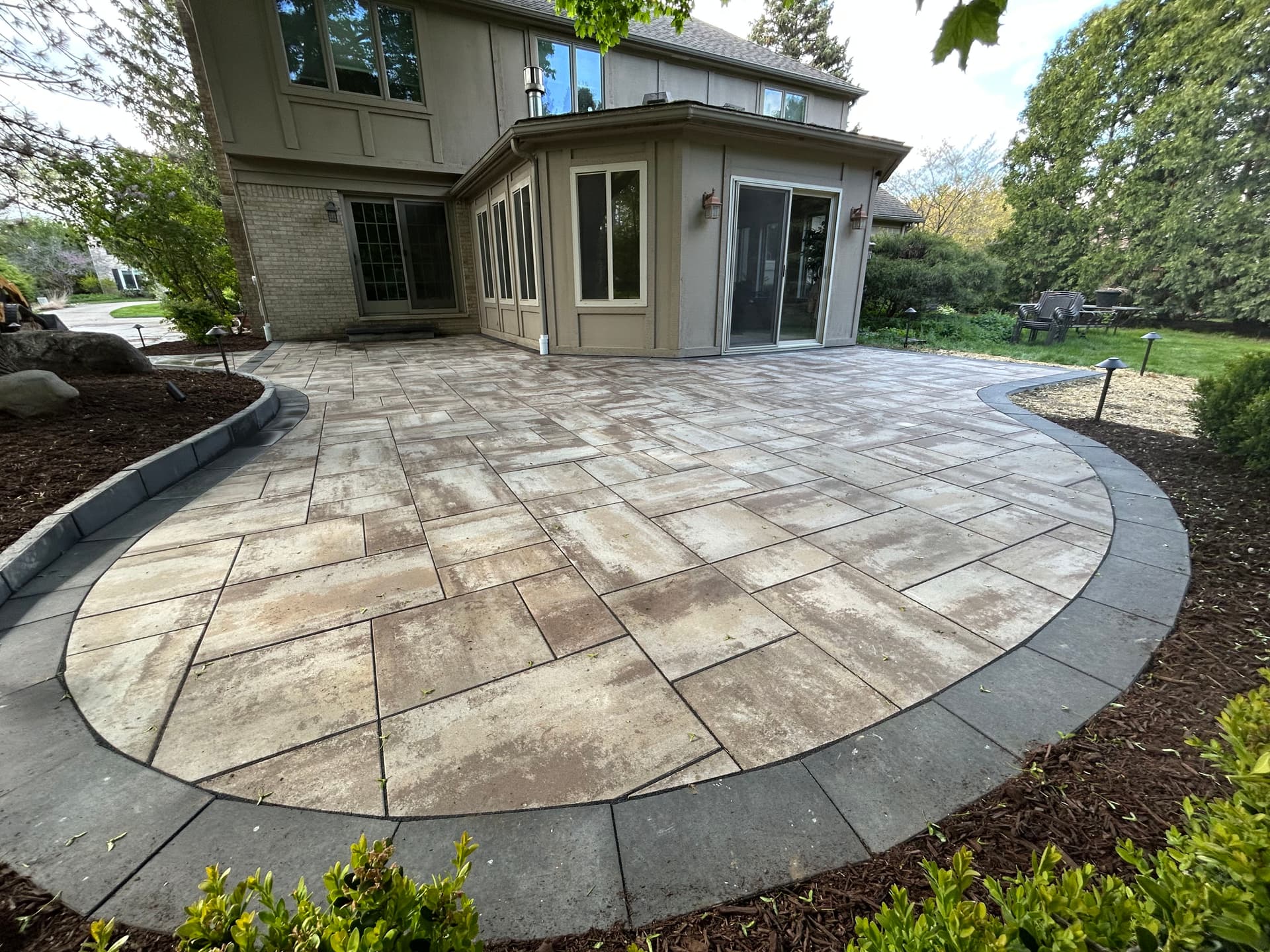
The patio itself is large. Large enough to hold furniture, host a gathering, and still have room to breathe. We used a mixed-size paver layout in a warm grey tone with a darker charcoal border running the full perimeter. That border does two things - it locks the whole surface together structurally, and it gives the edge a sharp, finished look. The curved shape of the patio wasn't arbitrary either. It follows the natural flow of the yard and ties into the surrounding mulched beds cleanly.
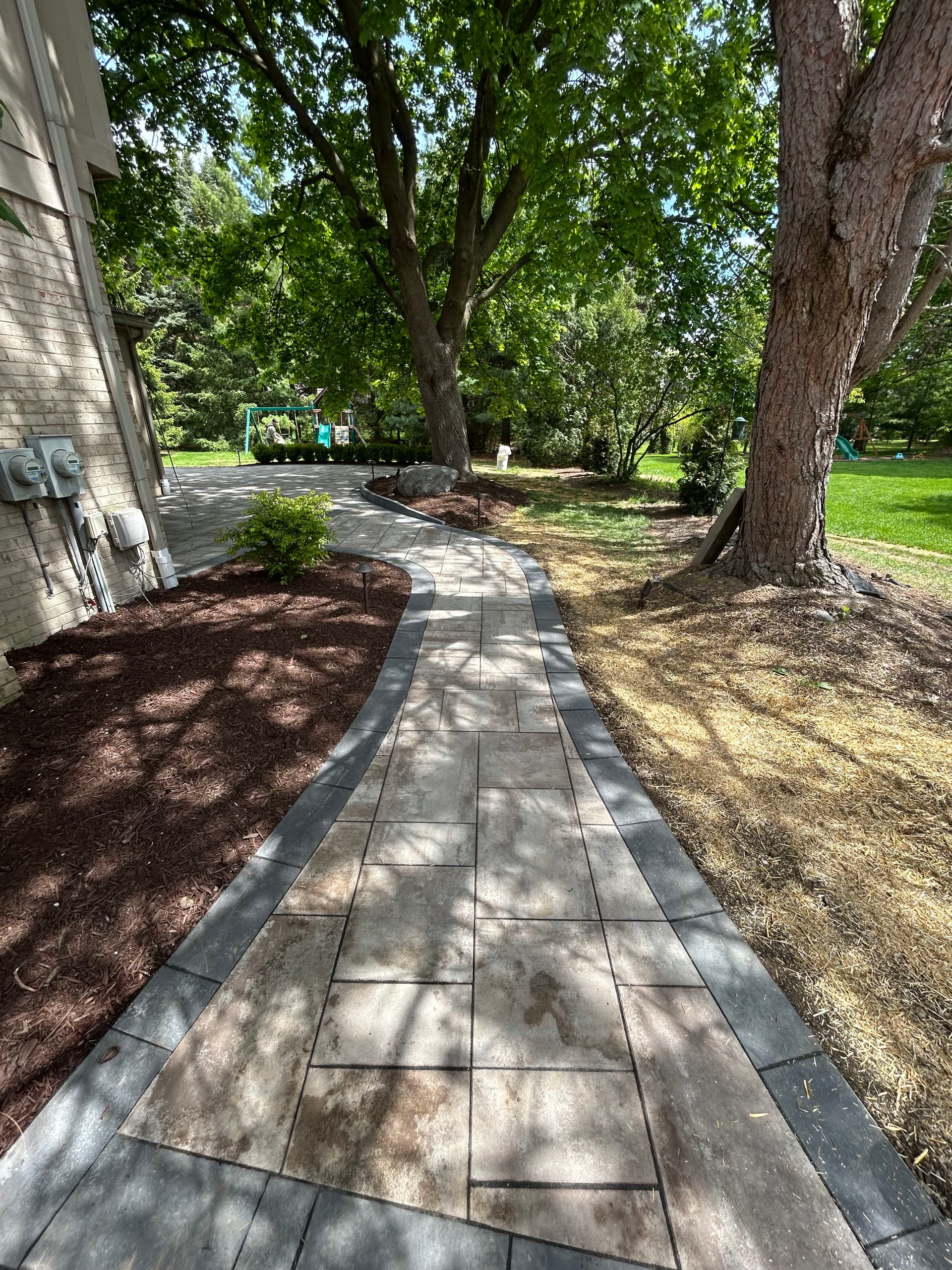
We also built a matching paver walkway that connects the patio around the side of the house. Same paver style, same dark border, same attention to keeping the lines smooth. It makes the whole property feel cohesive instead of pieced together. A good walkway isn't just a path - it's part of the overall design. When it matches the patio, the whole yard reads as intentional.
The lighting was part of the plan from the start. Low-profile path lights are positioned throughout the patio and along the walkway so the space stays usable after dark. That's a detail a lot of homeowners don't think about until after the install - and then they wish they had. Getting it in during the hardscape build is always the smarter move. No retrofitting, no cutting corners, no visible conduit running across finished surfaces.
Good hardscaping adds real, lasting value to a home. It also gives you a space you'll actually use - not just look at through a window. Whether you're thinking about a paver patio, a connecting walkway, or both together, the planning and execution behind the finished product makes all the difference.