Paver Patio and Retaining Wall Build in Linden That Started Way Underground
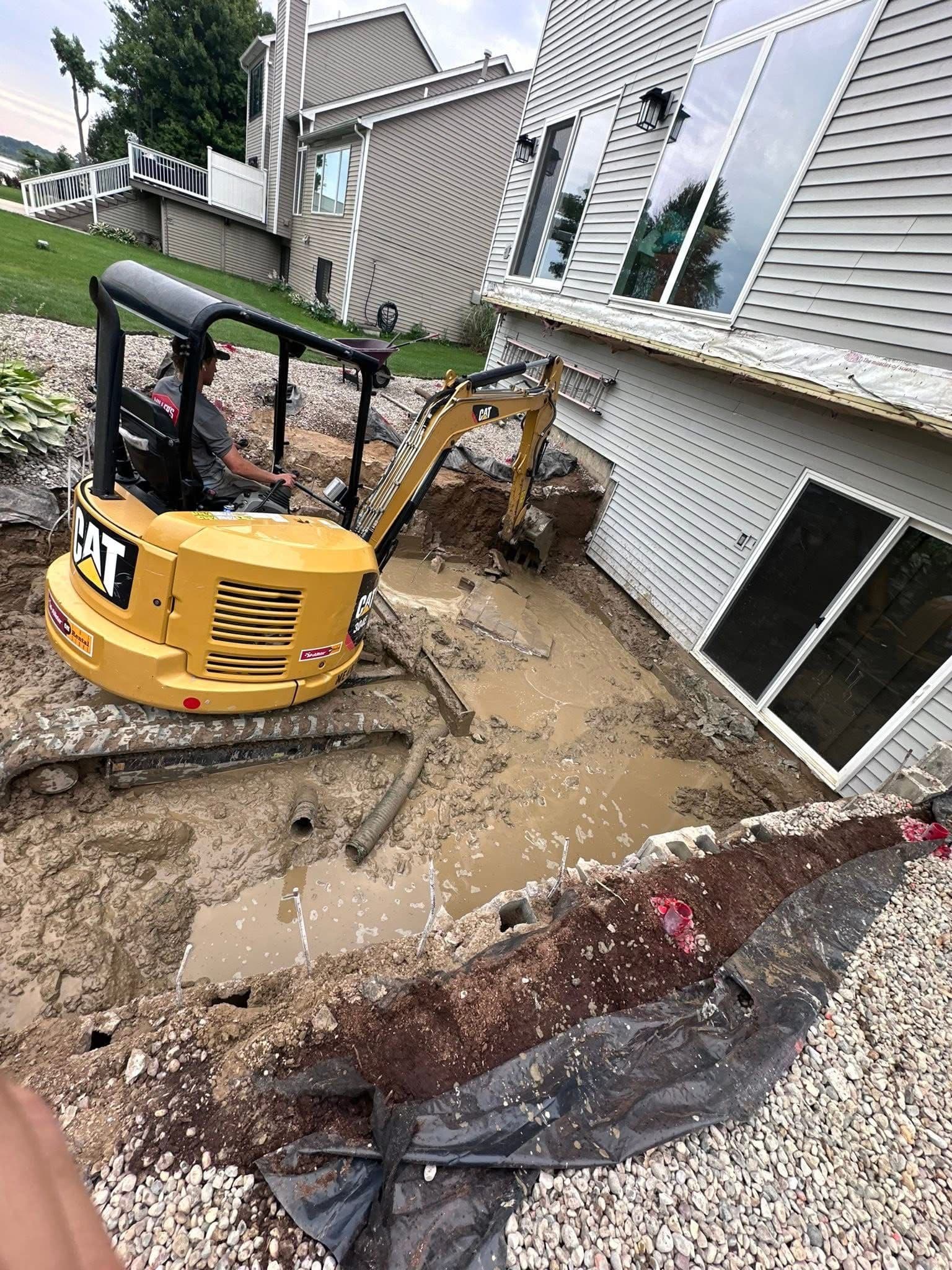
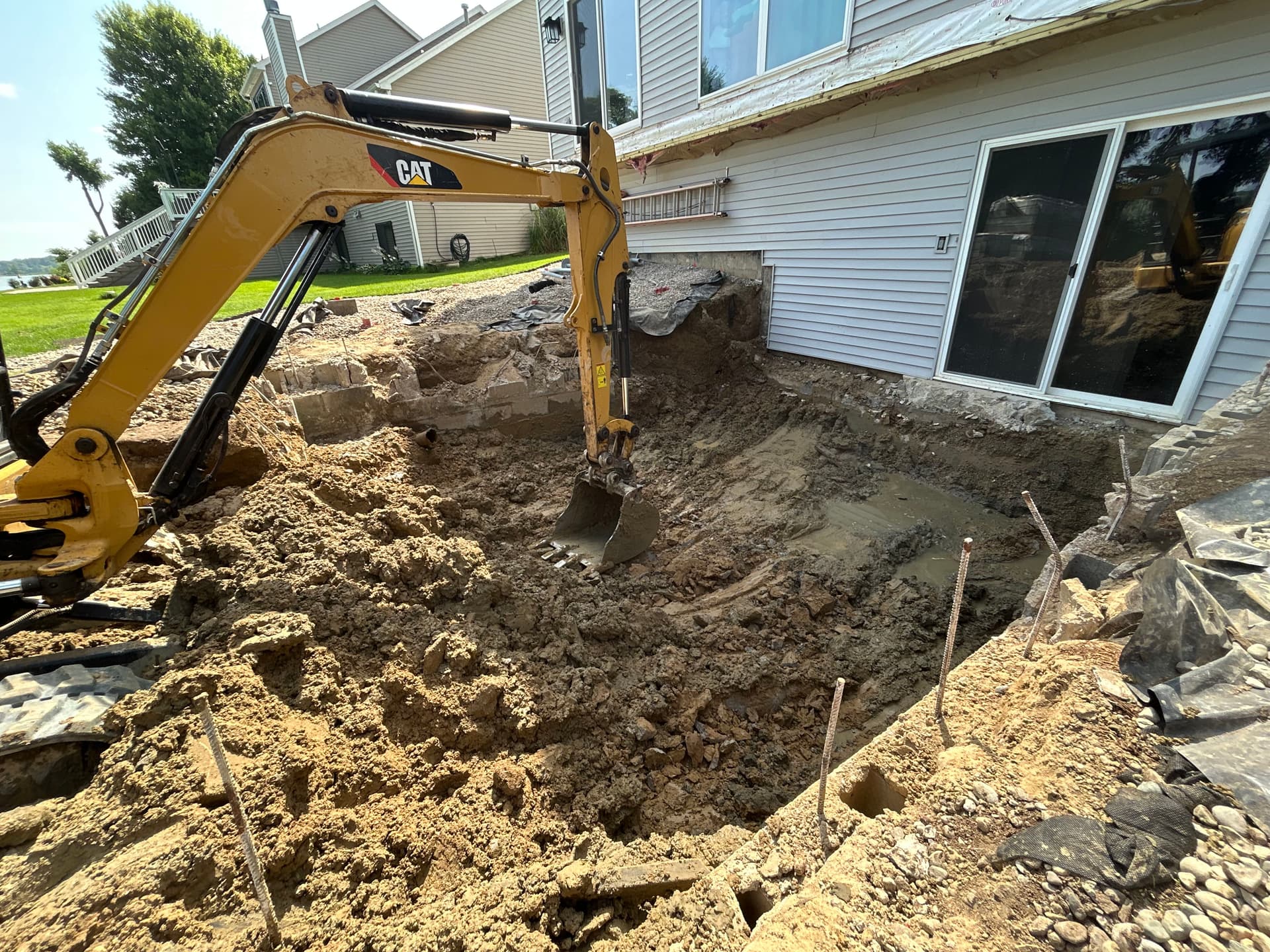
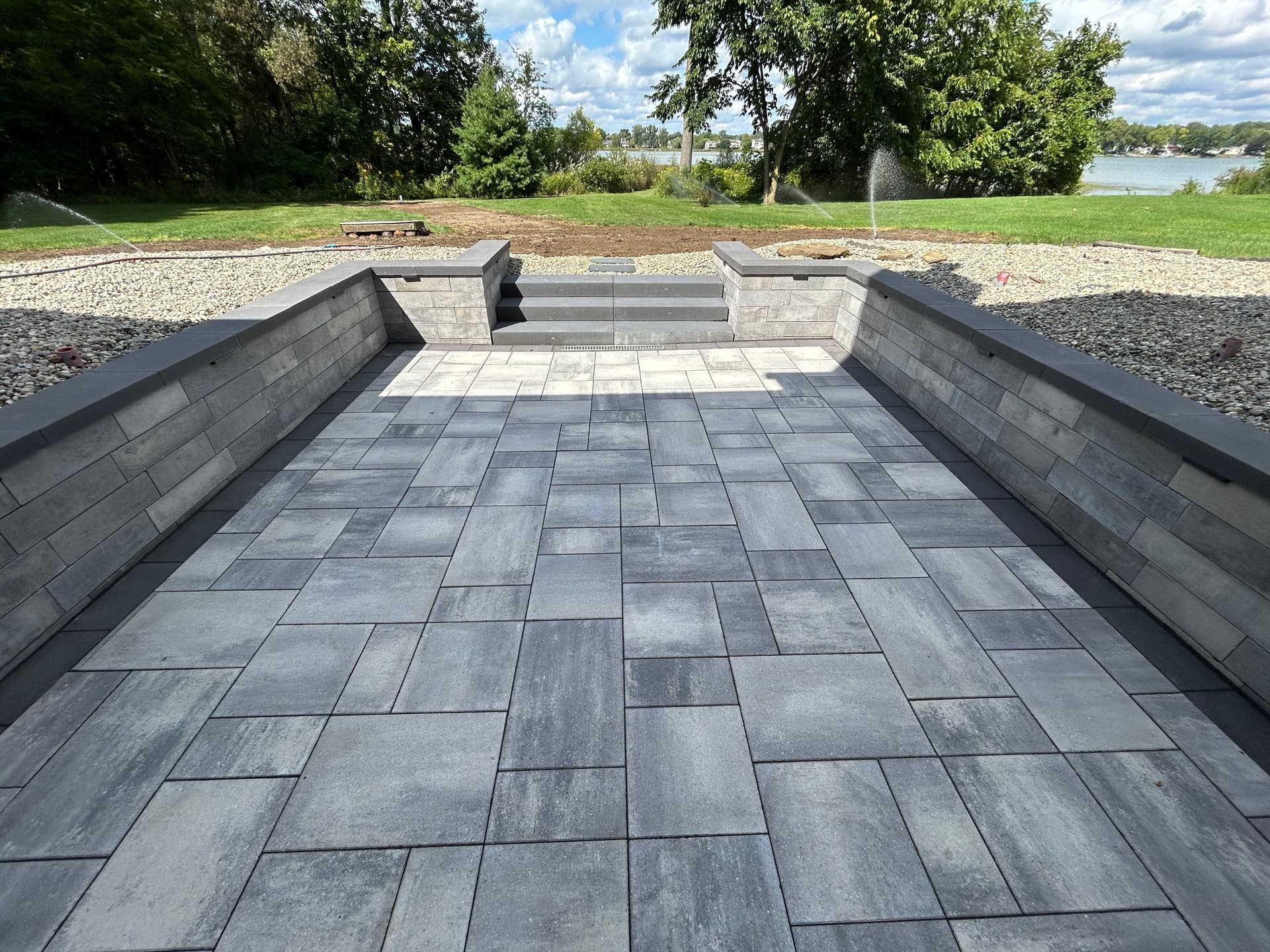
This one in Linden looked like a straightforward patio job on paper. It wasn't. The moment we started digging, we hit badly oversaturated soil - the kind that shifts, settles, and eventually destroys whatever you build on top of it. A lesser crew cuts corners and pours base material over the problem. We don't work that way.
We brought in the CAT mini excavators and kept digging until we reached solid, stable subgrade. That meant going deeper than originally planned and hauling out a lot of compromised material. We also installed drainage as part of the rebuild so water has somewhere to go instead of sitting and soaking into the base all over again. That step alone is what separates a patio that lasts from one that needs to be redone in five years.
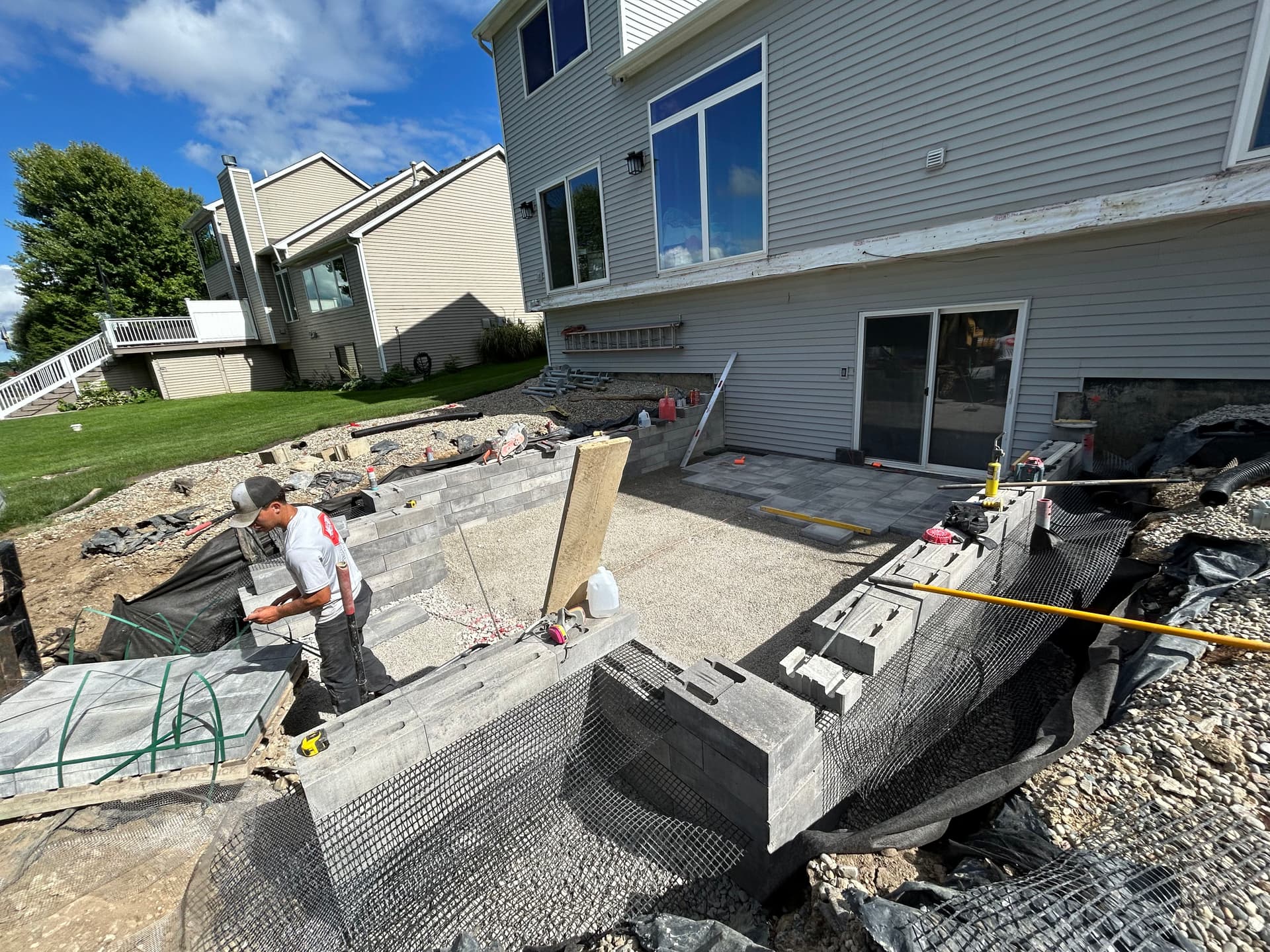
Once the base was right, we started building the retaining wall system. The geogrid reinforcement ties the wall back into the hillside, which is what keeps those walls from pushing out over time. You can see the wall taking shape on both sides - it's not just decorative, it's structural. Every course was set to keep that wall locked in place for the long haul.
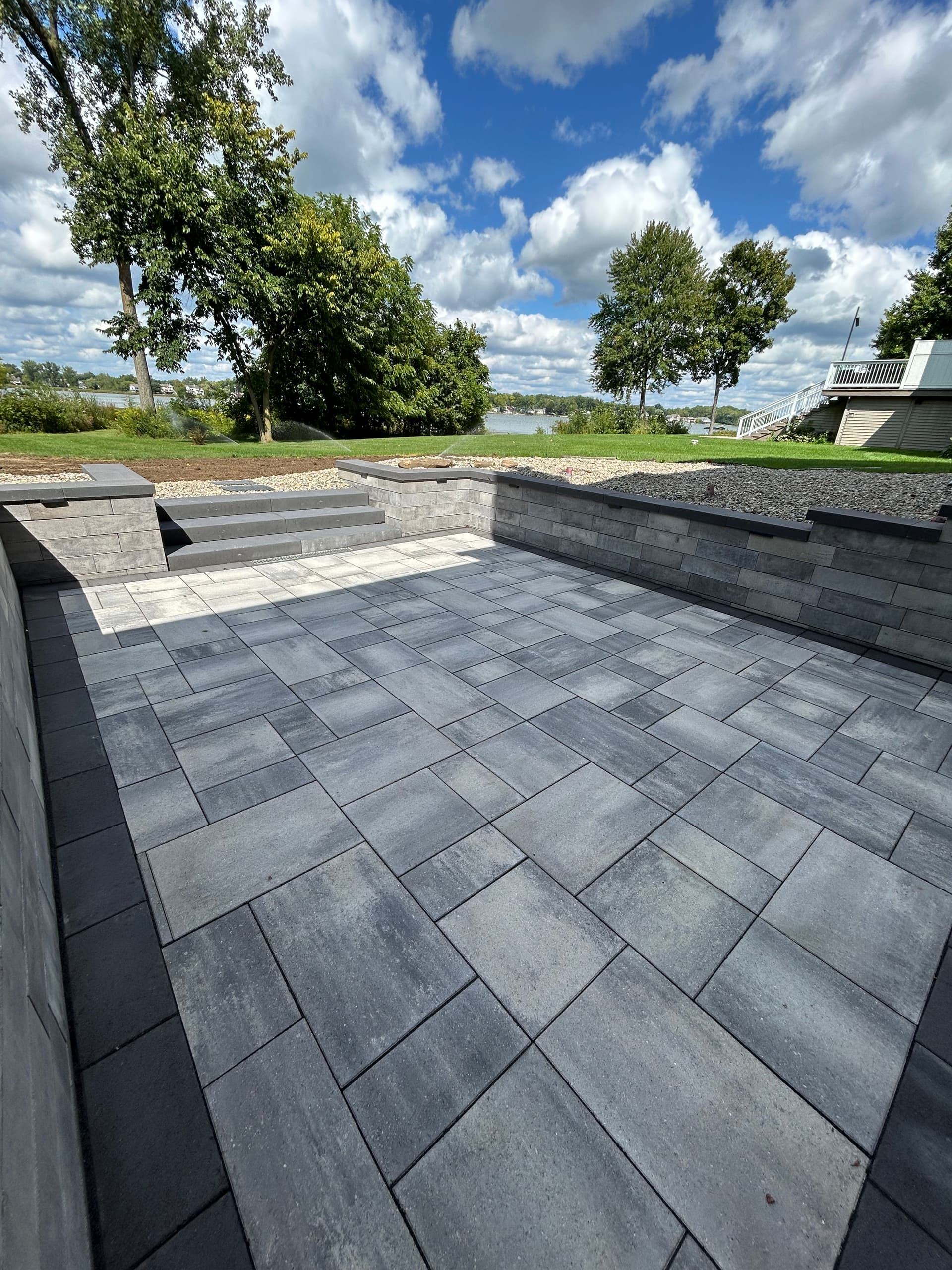
The finished patio is a large-format paver surface flanked by matching retaining walls with capped tops, paver steps leading out toward the yard, and a clean linear drain running along the base of the house. The whole system works together - the patio sheds water, the drain catches it, and the walls hold the grade. Nothing was left to chance.
Most people only see the finished surface. What you don't see is everything that happened underneath it - and that's exactly where this job was won or lost. We put the work in below grade so the finished product holds up the way it's supposed to. That's just how we build.