Poolside Retaining Wall Built Right From the Ground Up
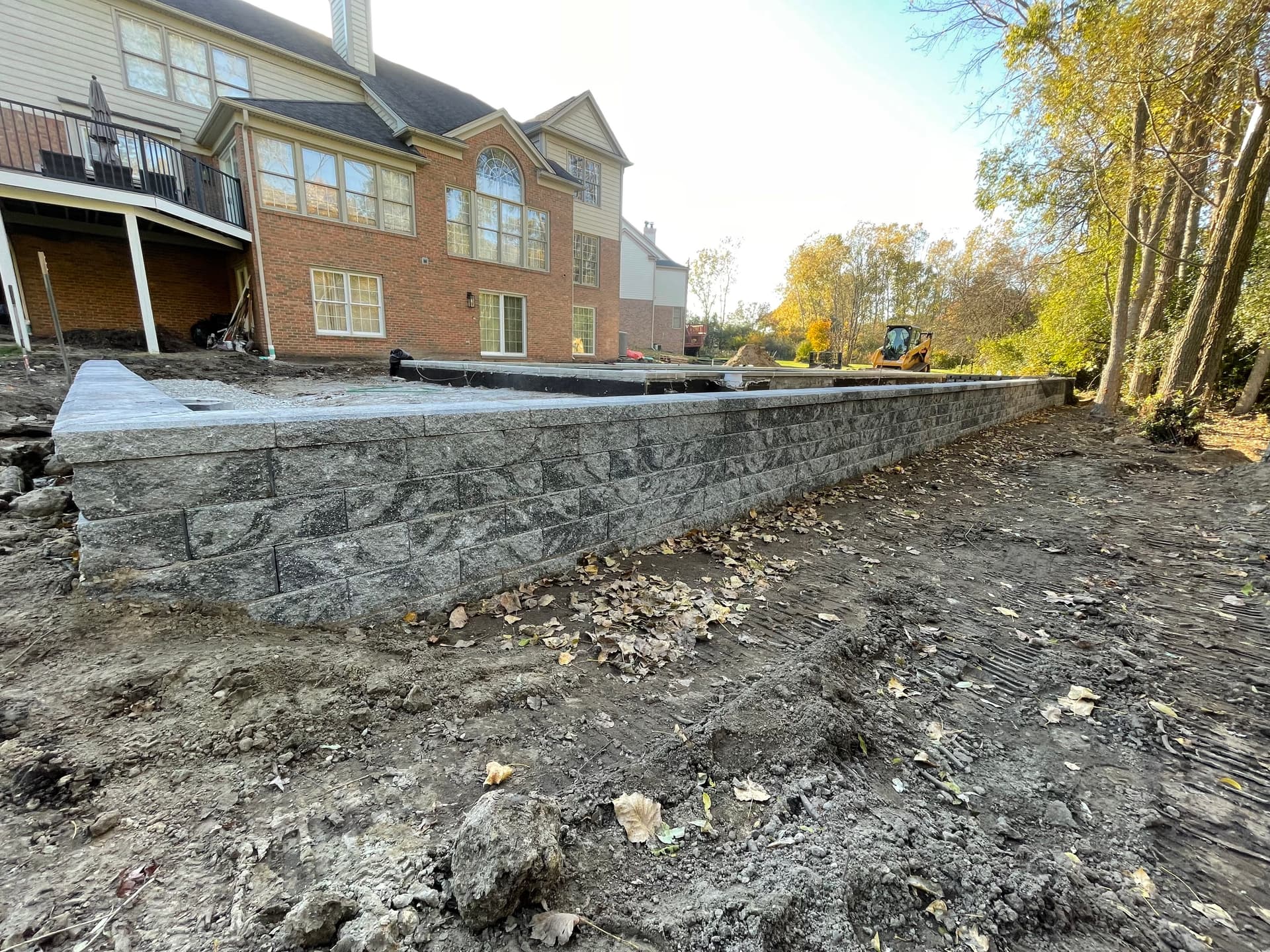
When you're adding a pool to a sloped backyard, the pool itself is only part of the equation. The ground around it has to be engineered to hold - otherwise you're dealing with erosion, shifting soil, and runoff that can cause real damage over time. That's exactly the kind of problem a properly built retaining wall solves.
Here's what we were working with - a large backyard with significant grade changes running alongside the pool installation. The goal wasn't just to make it look finished. It was to stabilize the entire area so the pool has a solid, secure perimeter that holds up for years. No shortcuts on something like this.
We used segmental concrete block to build the wall - the kind of material that's designed specifically for retaining applications. The staggered coursing and textured face give it a clean, finished look, but the real value is structural. Each course is set to lock in and resist the lateral pressure of the soil behind it. That's what separates a wall that lasts from one that fails in a few seasons.
A retaining wall at the pool's edge also plays a big role in water management. When rain hits a sloped yard, water moves fast. Without a wall to interrupt that flow and direct runoff away from the pool shell and surrounding hardscape, you end up with washout, pooling, and long-term drainage headaches. Getting this right during the build - not as an afterthought - is what sets the whole backyard up properly.
This is the kind of work that doesn't always get noticed because it's supposed to blend in. But it's doing a lot of heavy lifting behind the scenes. A solid retaining wall is one of the best investments you can make when you're improving a backyard - especially one with any kind of slope.